If you run a leak testing line, you have probably noticed the conversation about tracer gases getting louder: helium, argon, and which one belongs where. It is a fair question, and it deserves a straight answer rather than a sales pitch.
Helium has long been our primary focus at Nolek, and for good reason. It remains the standard for finding the smallest leaks, and its record in high-precision testing is hard to beat. But we have been having a lot of conversations with customers about argon. If you are weighing your options, here is where it fits.
Filling the Gap in Your Testing Strategy
We do not see argon as a replacement for helium. Helium is, and will continue to be, the top performer when you need the highest sensitivity, down to the leak rates only a mass spectrometer can resolve. If you are manufacturing critical medical devices or sealed automotive electronics, helium is the right tool.
Argon is a bridge. It fills the operational gap between pressure decay testing and ultra-sensitive helium testing.
Think about your current setup. Pressure decay is a solid method for catching larger breaches, but it reaches its limit when you need to find smaller leaks without extending your cycle time. If your product sits in that middle ground, where air testing is not sensitive enough but helium goes well beyond your actual specification, argon is worth a look.
What Changes When You Test With Argon
When you introduce argon into your testing environment, there are a few physical realities to expect. Argon atoms are larger than helium atoms, so they do not travel through microscopic pathways in the same way. That difference is precisely why argon suits this intermediate tier: it is inert, traceable and dependable across the range of leaks it is meant to detect.
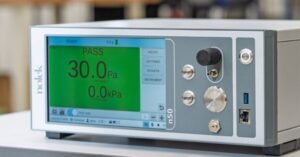
Integrating an argon system means you’re still getting a robust, quantifiable, and fully automated test. You still get the comprehensive data traceability you need for internal quality checks and external audits. And, crucially, you can still maintain the high-speed throughput your production line relies on. You are simply matching the sensitivity of the tracer gas to the specific, practical tolerance of your product.
Seamless Integration on the Factory Floor
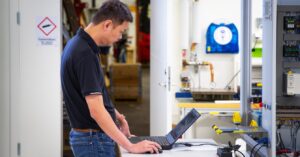
One of the most common questions we hear is, “Will introducing argon disrupt our current assembly line?” The short answer is no; it does not have to. At Nolek, we engineer fully integrated, automation-ready systems designed to fit your existing footprint, whichever tracer gas you use.
In fact, many modern manufacturing floors benefit from a diversified testing strategy. You might use helium leak testing for a highly critical internal component, and then use argon testing further down the line for the product’s outer housing.
If you are relying solely on pressure decay and finding it no longer meets your quality standards, stepping up to an argon system is a manageable transition that lifts your level of control. Our flexible custom fixture designs allow you to adapt your testing line efficiently, meaning your operators can manage changeovers quickly and keep downtime to an absolute minimum.
Matching the Method to the Product
Choosing the right testing method should not be guesswork. Every line is different, and matching the method to the product is the part we can help with. We love helium; it is the foundation of our highest-precision systems. But building a lean production line means having more than one option available.
Whether your products need the precision of helium or the intermediate performance of argon, the decision should rest on your actual specification rather than on habit. Send us the part and the leak rate you have to hit, and we will tell you which gas the job needs.