
When you manufacture pharmaceutical
products or medical devices, you aren’t just making a product; you’re
protecting lives. Whether you are sealing glass vials, producing closed-system
respiratory units or running millions of blister packs, there is no margin for
a missed seal. A compromised seal is not a quality control problem on the
factory floor; it is a direct risk to patient safety.
We know that maintaining strict
sterility and product integrity is your top priority. But as production targets
increase and line speeds get faster, a very real challenge emerges: how do you
ensure zero-compromise quality without creating a massive bottleneck in your
operations?
The Challenge of Catching the Invisible
The reality is that traditional leak testing methods often force a difficult compromise. You might be relying on destructive testing, which creates unnecessary waste and only tests a sample of your batch, leaving room for error. Or, perhaps you’re using older, slower methods that force your entire production line to run at a fraction of its true capacity.
When we’re talking about medical devices and pharmaceuticals, microscopic breaches matter. A leak so small it’s invisible to the naked eye is all it takes to allow moisture, oxygen, or biological contaminants to enter a sterile environment. Failing to catch these micro-leaks can lead to devastating consequences, including regulatory penalties, costly product recalls, and, most critically, harm to the end user. That is a heavy responsibility, but meeting those standards should not cost you throughput.
Why Automated Helium Testing Removes the Trade-Off
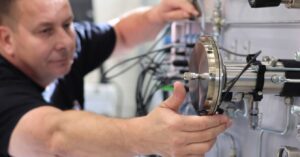
At Nolek, we have spent years engineering systems that remove the choice between speed and accuracy. By integrating automated helium leak testing directly into your production line, you can achieve the highest level of precision without slowing down your cycle times.
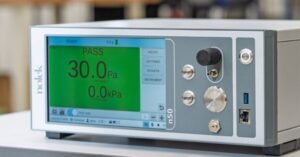
Why helium? It’s an inert, safe, and highly traceable gas that can slip through the tiniest of microscopic pathways. When used in a highly sensitive testing system, it detects breaches in packaging and components that other methods simply miss. And because the process is completely non-destructive, you aren’t throwing away perfectly good products just to prove your line is working.
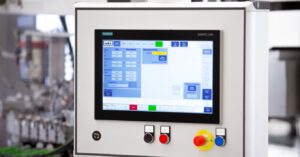
More importantly, automation transforms the testing process from a slow, manual checkpoint into a seamless, high-speed step in your manufacturing workflow. Where line speed allows, every blister pack, ampoule or catheter can be tested inline rather than sampled, so batch integrity is evidenced rather than inferred.
From Prototype to Production
We also know that buying a testing
machine solves only part of the problem. Every manufacturing setup is
different, and navigating the expectations of regulators such as the FDA and
EMA, alongside standards such as ISO 11607, can feel overwhelming. That is why
we view our relationship with you as a true partnership.
Our team works alongside you at every
stage of the product lifecycle. Are you in the early stages of R&D? We can
help with prototype verification, ensuring your new medical device or packaging
design is inherently leak-proof before you ever invest in full-scale tooling.
When you’re ready to scale, we design custom automated systems that drop right
into your existing footprint with minimal friction.
We also know that passing an audit
matters as much as passing a leak test. That is why our systems carry full data
traceability. When an auditor asks, you have the validation documentation and
the historical test data to hand, so you can evidence exactly how and when each
unit was tested.
Turning Compliance into confidence
Upgrading your quality control does not have to be disruptive. With the right testing method, regulatory compliance stops being a source of stress and becomes something you can point to.
You gain the confidence that every unit leaving your facility has been tested to the standard you set, and your line keeps moving at the speed your business demands. If destructive sampling is still the only thing standing between you and a validated seal, send us your pack format and the sterile barrier standard you work to, and we will tell you whether inline testing is practical at your line speed.