If you manage a production line today, you are likely feeling the pressure of global supply chain vulnerabilities, especially when it comes to volatile helium markets. We hear it all the time here at Nolek: you need to maintain rigorous quality control, but sudden drops in global helium supply can threaten to slow down your entire operation. Helium is an absolutely brilliant tracer gas. Thanks to its tiny atomic size and inert properties, it is unmatched for detecting ultra-fine, microscopic leaks. However, when helium becomes scarce and expensive, it is time to look at smart, alternative strategies to keep your lines moving smoothly without sacrificing quality.
Reserve Helium for Where It Truly Shines
One of the smartest moves you can make during a supply crunch is to evaluate exactly what you are testing. Helium is the undisputed default for high-sensitivity industrial testing. However, many manufacturers instinctively use helium for all their testing, simply because standard pressure decay methods fall short of their needed sensitivity.
This is exactly where argon steps in to save the day. Argon is a highly capable, inert noble gas that serves as a premier candidate for industrial-grade leak testing. Because argon is widely produced as a direct byproduct of fractional air distillation, its supply chain is incredibly stable and effectively insulated from the geopolitical shocks that frequently impact helium. By right-sizing your approach and utilising argon for moderate leaks, you can reserve your premium, scarce helium supply strictly for the ultra-fine testing where its unique properties are absolutely necessary.
Embrace Dual-Gas Flexibility on the Floor
You might be wondering if switching gases means ripping out your current infrastructure. The great news is that modern detection equipment is remarkably adaptable. While standard mass spectrometer leak detectors are typically hard-tuned to detect the mass-to-charge ratio of single-ionised helium, they can absolutely be configured to monitor the primary isotope of argon instead.
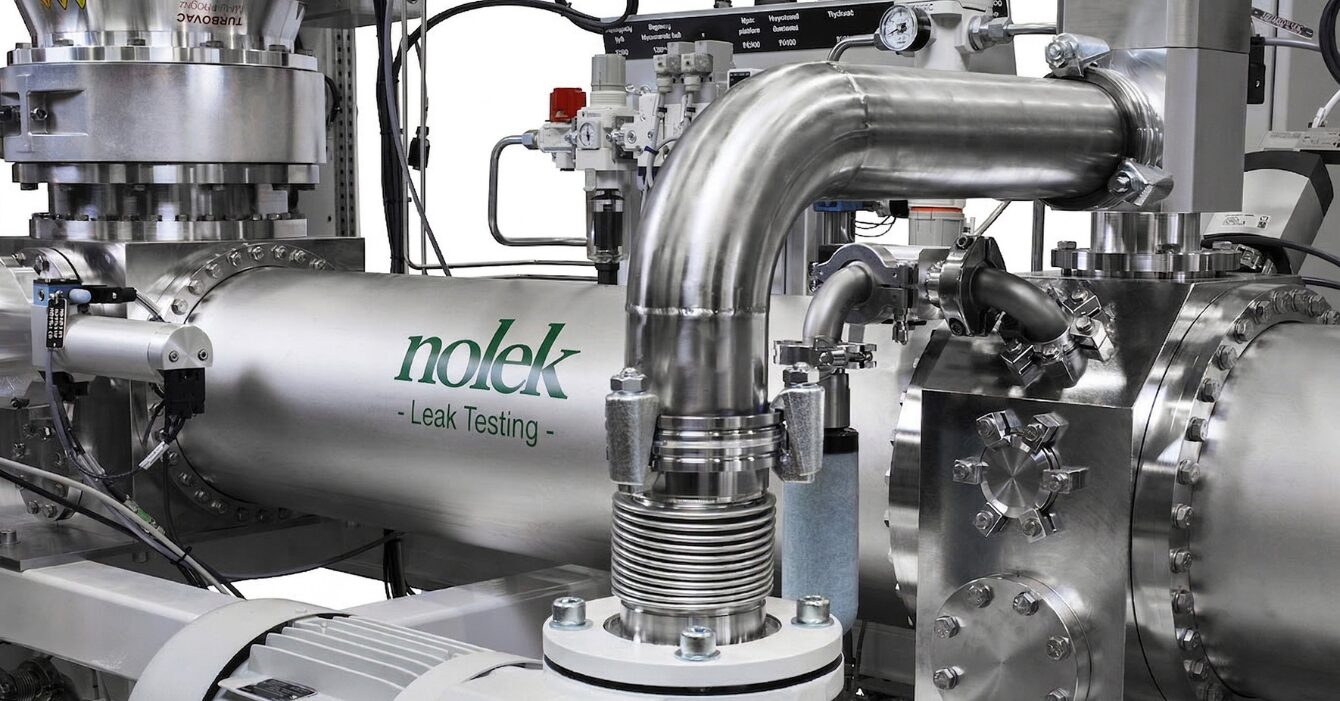
Today’s modular leak detectors are specifically optimised for integration into automated chambers and can perform high-throughput testing using pure argon. This gives your facility the flexibility to adapt to changing market conditions. When helium is hard to source, your equipment can pivot to argon, allowing you to seamlessly match the throughput of conventional systems without the stress of securing scarce gas supplies.
Approach Gas Dilution with Caution
When helium prices spike, another common strategy is to dilute your helium supply with air to stretch your budget. While this can be a helpful short-term fix, it requires immense precision to pull off successfully.
If you choose to use a diluted gas mixture, precise concentration control is absolutely critical. For instance, a minor absolute drift in your helium concentration can result in a significantly amplified deviation in your detected leak rate. To maintain accuracy, the tracer gas mixture must be controlled within a strict 5% margin of your target concentration. Modern sniffing leak detectors can automatically adjust their trigger levels when you program the dilution percentage into the software, but you must monitor this mix closely to prevent a perfectly good part from erroneously failing your test.
Simplify Your Infrastructure
Finally, looking beyond the scarcity of helium itself, transitioning some of your lines to argon can drastically simplify your everyday operations. Traditional helium testing systems designed for high-volume lines often require large, capital-intensive recovery compressors to capture and reuse the gas.
Because argon is so abundant and inexpensive, systems can be designed entirely without these complex, bulky recovery networks. This not only simplifies your gas delivery system and reduces your initial equipment footprint, but it also significantly lowers your ongoing maintenance burdens. Furthermore, argon-based systems can consume up to 30% less electrical power compared to conventional helium recovery setups, beautifully supporting your facility’s green manufacturing and energy management goals.
Navigating a helium shortage is rarely easy, but every challenge is a chance to build a more resilient and efficient production line. By strategically integrating argon and optimising your current equipment, you can protect your facility from future supply shocks. With the right approach, achieving your leak testing objectives is closer than you think. Nolek is always here to act as your collaborative partner. Reach out to our engineering team today to see how we can help you right-size your testing strategy.