For as long as most of us have been in manufacturing, helium has been the go-to choice for high-sensitivity leak testing. It is practically a reflex at this point. If you need to verify a part to a high standard, you use helium. It’s an incredibly valuable tool, and for the absolute tightest testing requirements, it remains the definitive choice.
But every now and then, it’s helpful to take a step back and look at our standard processes to see if there’s room to expand our options. With production lines handling a wider variety of components than ever before, a lot of quality managers are looking at their test cells and asking a really practical question: is there a way to give our floor more flexibility?
That is where atmospheric argon comes into the picture. Rather than looking at it as a replacement for your core technology, it helps to see argon as a powerful way to expand your testing toolkit. It fills an important gap, serving as an excellent testing range right between ultra-sensitive helium systems and standard pressure decay methods.
Finding the Right Precision for Your Product
Helium is incredible at what it does. Because its atoms are so tiny and its ambient background is so low, it can find microscopic leaks right down to a scientific-grade level. When you are building ultra-high vacuum chambers or critical safety components with zero tolerance for error, nothing beats it.
But when you look at the full spectrum of manufacturing, every product has its own unique sweet spot. In many industrial applications, like certain automotive components, residential HVAC systems, or consumer electronics, the engineering specification requires high precision, but doesn’t strictly demand the ultra-sensitivity of helium.
This is exactly why having more options in your tracer gas toolkit wins. For parts that fall into that mid-to-high sensitivity range, argon ticks almost every single box. It allows you to maintain total testing confidence while tailoring the process perfectly to the part’s actual requirements.
Stability and Predictable Savings
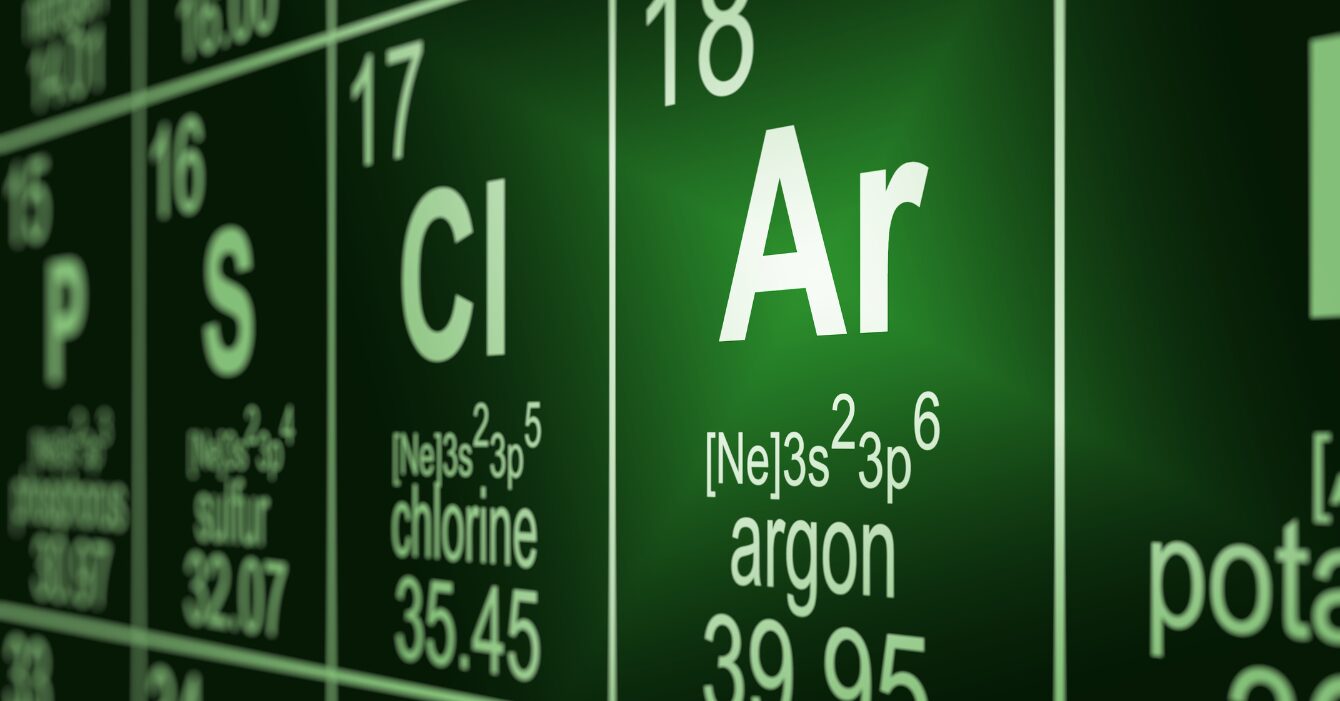
One of the great benefits of introducing argon to your line is the sheer predictability it brings to your operations. Argon makes up nearly 1% of the air we breathe every day. It is produced locally all over the world as a natural byproduct of commercial air separation. Because it’s an abundant atmospheric gas, incorporating it into your mid-range testing applications means you build a highly stable, localised option right into your facility.
The economics are also a fantastic bonus. Because argon is so readily available, it typically comes at a fraction of the cost of helium. When you align the right gas with the right testing range, the day-to-day operating costs become incredibly flat and predictable, giving your team extra peace of mind as production scales up.
How Modern Technology Handles the Ambient Air
If you know a bit about leak testing physics, you might have a very reasonable question: “If there is naturally about 1% argon in the atmosphere, won’t that background signal throw off the measurement?”
It’s a great point, and historically, that baseline signal did make argon testing a challenge on high-speed lines. But leak testing technology has caught up beautifully. Modern mass spectrometers can be tuned specifically to isolate argon’s unique mass-to-charge ratio with absolute precision.
More importantly, modern leak detection systems feature dynamic background compensation software. Instead of just subtracting a static background number, these smart algorithms continuously track and model the falling background curve in real time while the test chamber evacuates. They can spot a tiny argon leak signal almost instantly, keeping your cycle times lightning-fast and your throughput high, without needing complex secondary infrastructure.
Streamlining the Factory Floor
Expanding your capabilities to include argon also opens up some great opportunities for shop-floor versatility. Because argon doesn’t carry the same cost pressures as scarcer gases, managing it is incredibly straightforward. You can design streamlined, automated testing lines where complex recovery and filtration loops aren’t a mechanical necessity.
This lighter infrastructure makes it much easier to lower the overall energy consumption of your test cell by up to 30%. Plus, argon is highly versatile even after the test is done. Many forward-thinking plants find success by diverting post-test argon into other areas of their operation, like using it as a shielding gas in robotic welding cells or for purging process lines.
A Collaborative Approach to Smart Testing
At Nolek, we’ve spent years validating alternative tracer gases, executing over 300 test runs to ensure these solutions deliver the exact repeatable precision you expect. We believe that every process challenge on the factory floor is just a wonderful chance to look at things differently and create a more adaptable workflow.
Optimising your quality control isn’t about choosing sides between different testing methods. It’s about building a balanced, versatile system that gives your team the exact right tool for the job. With the right approach, achieving your leak testing objectives is closer than you think, and we are always here to help you find the perfect configuration for your specific setup.
Want to see where argon might add value to your current line?
We’d love to help you review your product mix. Reach out to our engineering team today, and let’s work together to explore how expanding your tracer gas options can bring extra versatility and resilience to your production floor.