Every manufacturing manager knows the daily balancing act of delivering perfectly sealed products while keeping production costs in check. For decades, the undisputed champion of industrial leak testing has been helium. It is a brilliant tracer gas, unmatched for finding microscopic defects down to 10⁻¹² mbar·L/s. Here at Nolek, we agree that helium will always be a magnificent and essential tool for ultra-high vacuum environments and highly specialised testing. However, we also love helping our partners find smarter, more economical ways to work when that premium, ultra-fine sensitivity simply isn’t required. That is exactly why we are so eager to share the financial benefits of utilising argon as a complementary alternative for your everyday testing.
Re-evaluating Raw Material Expenses
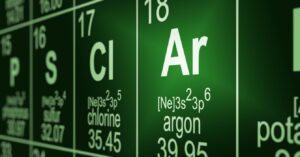
When you look at raw material expenses, the difference between these two highly capable gases is substantial. Helium is relatively scarce, which naturally influences its market price. Argon, on the other hand, is globally abundant and widely produced as a by-product of air separation. Because of this incredible abundance, helium typically costs 5 to 15 times more per cubic meter than argon in many industrial markets.
If your production line only requires moderate leak testing, such as identifying reject rates in the 10⁻⁵ mbar·L/s range, you have a fantastic opportunity to right-size your strategy. By utilising argon for these moderate leaks, you instantly streamline your daily consumable budget while reserving your valuable helium supply for the specialised applications that truly demand its unique properties.
Shrinking Your Energy Footprint
Streamlining your budget goes far beyond the purchase price of the gas itself. Think about the electricity required to keep your testing cells running continuously. Traditional high-volume helium systems often rely on heavy, energy-intensive recovery compressors to capture and reuse the gas.
Because argon is so affordable and accessible, you can bypass these high-pressure recovery systems entirely. In fact, leak testing systems designed around argon can consume up to 30% less electrical power compared to conventional tracer gas setups. Over the course of a year, that steady reduction in energy demand creates a beautifully leaner and greener operating budget.
Simplifying Equipment and Maintenance
Sometimes, the best way to cut costs is to simplify your operations. When helium prices fluctuate, a common short-term strategy is to dilute the helium supply with air to stretch the budget. While helpful, this requires immense precision; a minor drift of just ±1% in your gas mixture can result in a ±10% deviation in your detected leak rate, adding complexity to your quality control.
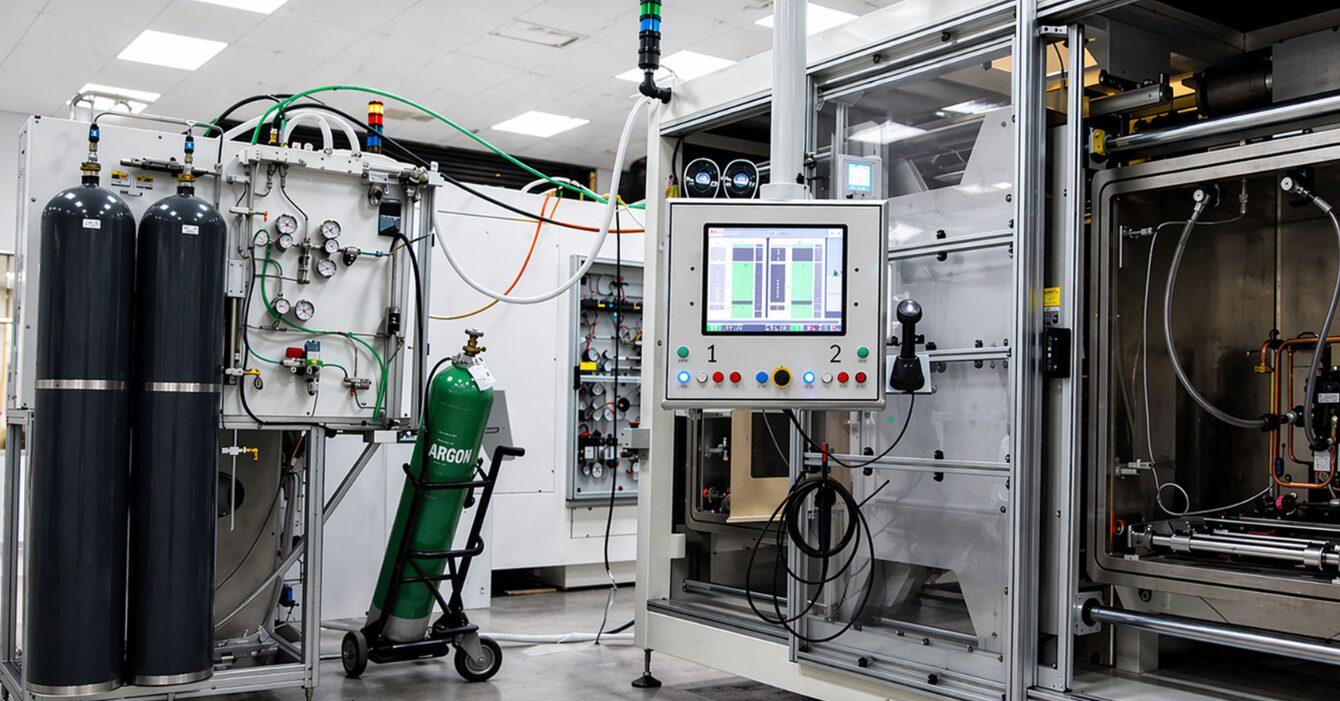
Alternatively, testing with pure argon allows for a much simpler infrastructure. You do not need complicated mixing stations or bulky recovery banks, which makes the whole setup lighter, quicker to install, and much easier to maintain. Fewer moving parts inevitably mean less time spent on specialised maintenance. Plus, if your production volumes increase, argon-based solutions scale up beautifully without forcing you to completely overhaul your equipment.
Building a Circular Factory Economy
One of the most exciting ways argon helps streamline costs is through its downstream versatility. Helium is a remarkably light, non-renewable resource; once it vents, it easily escapes the atmosphere entirely. Argon, conversely, is a heavier, globally abundant noble gas that easily supports a circular economy right inside your own facility.
After an argon leak test is completed, the exhausted gas can often be reclaimed and repurposed to support other factory processes. For example, you can divert it to serve as a shielding gas in your automated welding cells or use it for purging chemical process lines. This incredible dual-purpose utility maximises the return on investment for every bulk tank you purchase, reducing total facility gas waste.
Optimising your budget does not mean you ever have to sacrifice the quality or reliability of your testing. Transitioning your moderate leak testing to argon offers a highly practical, future-ready alternative that protects your bottom line. For facilities using thousands of cubic meters of gas per year, this strategic shift can potentially save millions annually. Every challenge on the production line is a chance to create something smarter and more efficient. With the right approach, achieving your leak testing objectives while staying well under budget is closer than you think. If you are ready to explore exactly how much your facility could save by adding argon to your toolkit, the team at Nolek is here as your collaborative partner to provide the dedicated engineering support you need to evaluate your lines today.