When industrial manufacturers talk about sustainability, the conversation usually revolves around solar panels, energy-efficient lighting, or switching to electric vehicles. Carbon accounting software tallies up raw materials, shipping emissions, and electricity bills. But there is another area where quality control teams are discovering meaningful environmental wins, and it sits right inside the tracer gas testing bay.
For decades, helium has been the standard for high-sensitivity leak detection. Because of its unique physical properties, nothing matches its performance when you need to find microscopic leaks in ultra-critical components. It is a proven, indispensable asset for manufacturing lines worldwide, and for the tightest quality specifications, it remains the definitive choice.
As production lines expand to build the next generation of green technologies, like advanced heat pumps and electric vehicle components, factory floors are busier than ever. With this growth comes a natural desire to optimise resources and make workflows more eco-friendly. True sustainability isn’t about moving away from the high-precision tools that keep your quality world-class; it’s about making your entire setup more versatile. By introducing atmospheric argon into your facility’s testing options, you can create a highly efficient, multi-layered strategy that supports your environmental goals while maintaining total testing confidence.
Optimising Resources Through Intentional Design
Every component that comes across an assembly line has its own specific engineering requirements. Some parts demand absolute perfection at a microscopic level, while others require high-precision verification but have slightly more forgiving tolerances.
When you expand your available testing methods, you give your team the freedom to look at each product individually. Instead of applying a single high-sensitivity process across the board, you can design a flexible quality control workflow. For the most demanding specifications, your helium machinery remains the core focus, ensuring that your most specialised resources are directed exactly where they are needed most.
For parts of the process that sit in a mid-to-high sensitivity range, having argon-compatible machinery ready to go allows you to maintain incredible testing precision while taking a lighter approach to resource consumption. This tailored strategy keeps your production lines flowing beautifully, minimises unnecessary wear on specialised recovery systems, and ensures that every gas molecule is used with maximum efficiency.
Capitalising on the Ambient Air
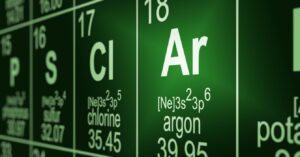
One of the most rewarding aspects of adding argon to your facility’s capabilities is how naturally it fits into a modern, circular economy. Argon is actually a major component of the air we breathe every single day, making up nearly 1% of the Earth’s atmosphere.
Because it is harvested globally as a natural byproduct of commercial air separation, the standard process used to produce oxygen for medical use and nitrogen for food packaging, utilising argon creates an incredibly clean loop. The gas is captured from the ambient environment, utilised in your quality control station to verify your parts, and can eventually be returned harmlessly back to the atmosphere.
For facilities working hard to meet modern energy management standards like ISO 50001, this atmospheric flexibility is a massive advantage. It allows you to step up your green initiatives right on the production floor without having to compromise on the rigorous, data-driven accuracy your customers expect.
A Collaborative Way Forward
At Nolek, we believe that looking at old challenges through a new lens is the best way to spark innovation on the factory floor. Enhancing the sustainability of your quality assurance process isn’t a matter of choosing between one gas and another. It’s about building a versatile, forward-thinking operation that gives your team the right options for the right job.
When you create a flexible testing environment that utilises the unmatched power of helium alongside the eco-friendly stability of argon, you get the best of both worlds: unbeatable precision and smart resource management.
With the right collaborative approach, achieving both your quality targets and your environmental goals is closer than you think.
Want to explore how to add more flexibility to your testing lines?
We are always here to help you review your current configuration. Reach out to our engineering team today, and let’s work together to discover how a diversified gas strategy can bring extra versatility and peace of mind to your operations.