More OEMs in electronics, automotive, and telecom sectors are tightening their supplier approval processes. Component reliability, sealing quality, and environmental resilience all depend on consistent manufacturing, and leak testing has become one of the clearest indicators of process stability. Yet many suppliers still submit parts with limited or incomplete leak-related evidence.
This article explains why structured leak test data strengthens supplier qualification, reduces risk in the supply chain, and helps OEMs build confidence in long-term production partnerships.
Why Leak Testing Belongs in Supplier Qualification
A component that passes functional tests can still fail in the field due to moisture ingress, pressure fluctuations, or material stress. Leak testing exposes these weaknesses before they reach final assembly.
Three reasons make leak data essential for supplier approval:
1. It reflects real manufacturing consistency
Variations in moulding, machining, gasket installation, or assembly torque are directly visible in leak test data. Consistent readings show process control, not just component performance.
2. It predicts long-term field reliability
Ingress failures often begin with micro-issues that don’t appear during electrical or mechanical checks. Leak testing highlights these early warning signs.
3. It provides a measurable quality benchmark
OEMs can define clear leak thresholds that suppliers must meet. This reduces ambiguity and improves communication across engineering and procurement teams.
What OEMs Should Expect From Suppliers
High-performing suppliers should provide more than a pass-fail statement. OEMs increasingly look for:
- Sample-level data showing distribution, not only averages
- Documented test conditions and fixtures used
- Stability across several production batches
- Traceability for each tested part
- A clear calibration and maintenance plan for the test equipment
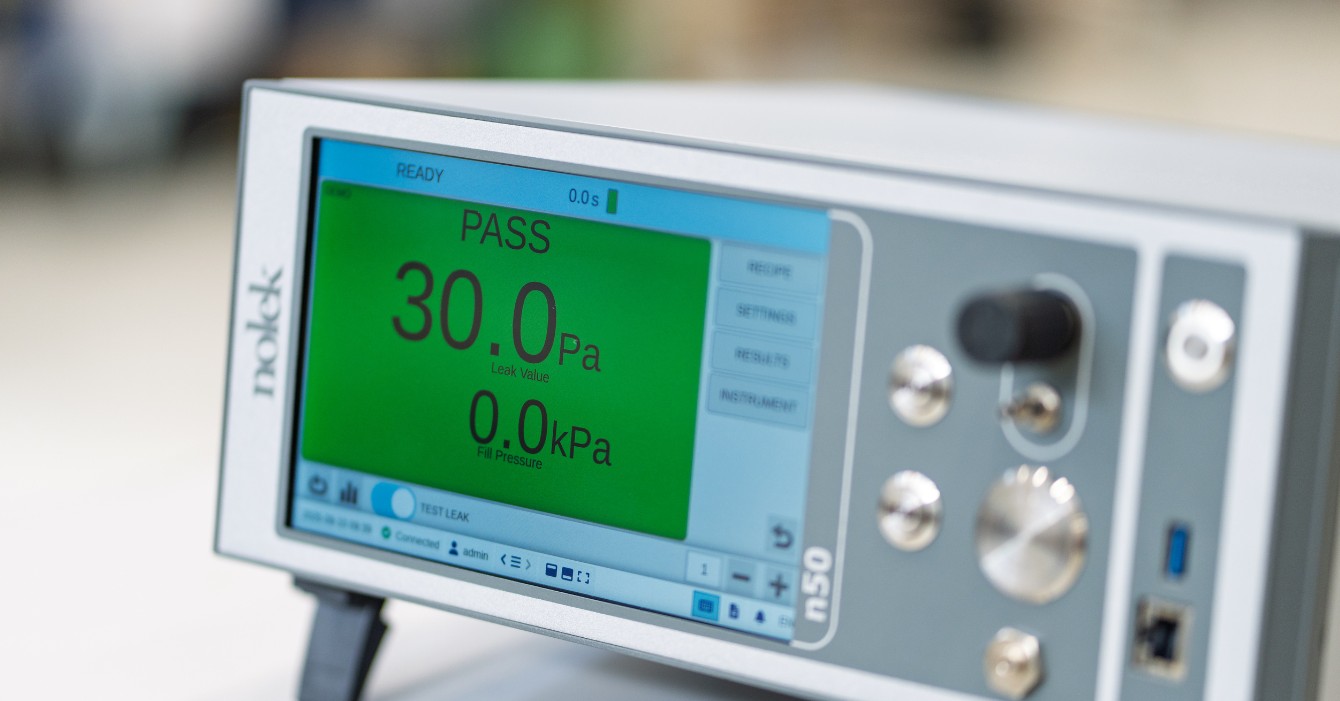
Our CES systems support these expectations with unit-level data logging, recipe control, and consistent measurement stability stemming from in-house instrument development.
How Leak Test Data Strengthens PPAP Submissions
OEMs working under IATF 16949 or automotive PPAP frameworks require clear evidence that a process is stable and repeatable. Leak test data contributes directly to:
Capability Studies (Cpk/Ppk)
A stable leak test process shows that sealing quality remains within specification limits.
Control Plans
Leak thresholds and test sequences can be defined as standard checks for incoming inspection.
Failure Mode and Effects Analysis (FMEA)
Ingress risks are often high-severity events. Leak test data helps quantify likelihood and detectability, improving the relevance of FMEA ratings.
Run-at-Rate Validation
Real-time leak test performance helps OEMs confirm that quality output is possible at actual production speed.
Why Suppliers Benefit From Strong Leak Test Evidence
It’s not only OEMs who win. Suppliers with robust leak testing capability enjoy:
- Greater trust from procurement and quality teams
- Shorter approval cycles, data removes doubt
- Fewer disputes during quality concerns or field failures
- Stronger justification for CAPEX investments in testing technology
- Easier alignment across global customer sites
Many suppliers also use leak test data internally to fine-tune assembly processes or tooling, improving their overall efficiency.
How Nolek Supports Supplier and OEM Alignment
Nolek’s leak testing solutions help suppliers generate data that OEMs trust. Key features include:
- High sensitivity suited to electronics housings and control modules where micro-leaks cause ingress failures
- Fast cycle times to support inline or near-line testing during volume production
- Flexible fixture design for varied product families, ideal for suppliers handling multiple SKUs
- Unit-level data logging compatible with MES and ERP systems, supporting traceability demands
- Stable measurement performance over time thanks to Nolek’s in-house instrument development
These capabilities allow suppliers to present a strong, data-backed quality profile during approval processes and during ongoing audits.
Wrapping Up
Leak test data is becoming a central element of supplier qualification for good reason. It offers OEMs a clear view of process stability, predicts long-term reliability, and provides a measurable benchmark for environmental sealing.
Suppliers who invest in consistent, traceable leak testing position themselves as low-risk, high-value partners, an advantage in competitive automotive, telecom, and industrial markets.