As electronics become more central to vehicles, industrial machines, and connected devices, the demands placed on control units are intensifying. Higher power density, compact housings, complex sensor arrays, and mixed-material assemblies all increase the risk of moisture and particle ingress. A strong sealing strategy is no longer an afterthought. It must be engineered into the product from the first design iteration.
This article outlines how design engineers can build reliable sealing systems for next-generation control units and how deterministic leak testing supports both development and production.
Why New Control Units Need a Different Sealing Approach
EV modules, telecom control boxes, and industrial automation units are exposed to more aggressive conditions than previous generations.
Modern challenges include:
- Greater thermal cycling due to high power loads
- More connectors, vents, and interfaces per enclosure
- Miniaturised housings with reduced sealing area
- Faster product refresh cycles
- Outdoor deployment for telecom and IoT systems
- Compliance expectations such as IPX/IP6X
These trends make sealing more complex and increase the need for precise, repeatable verification during development and manufacturing.
Engineering Principles for Robust Sealing
1. Design for Consistent Compression
A gasket or seal performs best within a specific compression range. Uneven clamping or variable torque leads to micro-gaps that may not appear during initial testing but cause problems later.
2. Control Surface Geometry Early
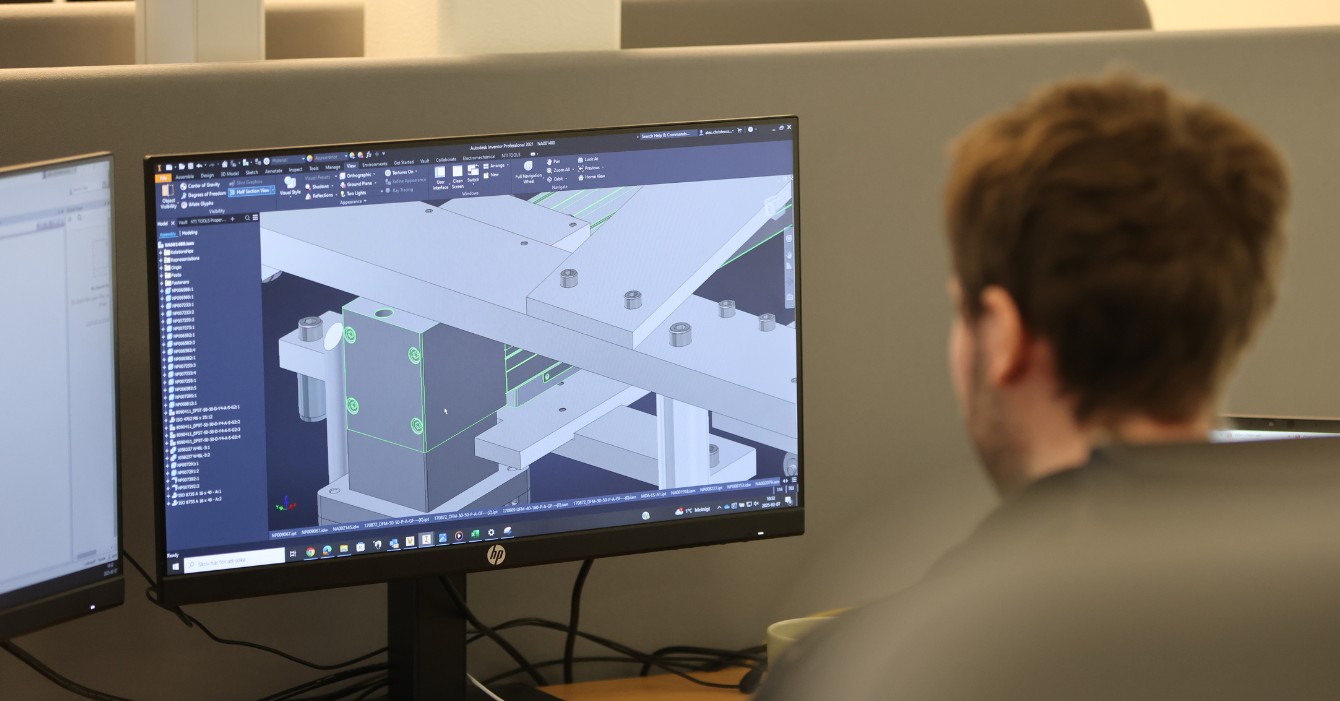
Small variations in flatness, draft angles, or wall thickness affect sealing pressure. Aligning mechanical tolerances with sealing requirements prevents expensive redesigns late in development.
3. Consider the Interaction of Materials
Plastics, metals, adhesives, and elastomers behave differently across temperature cycles. Understanding these behaviours is essential for predicting long-term sealing performance.
4. Minimise Leak Paths Where Possible
Cable entries, membrane vents, and screw bosses introduce risk. Reducing the number of interfaces simplifies sealing and testing.
Why Developers Need Early Leak Testing in the Design Cycle
Waiting until production to verify sealing performance often leads to surprises. Instead, deterministic leak testing during prototype stages helps engineering teams:
- Identify weak points in the enclosure design
- Validate gasket choices and material compatibility
- Establish realistic leak rate thresholds linked to ingress risk
- Build a data foundation for PPAP or design validation
Nolek’s high-sensitivity pressure decay instruments, developed in-house, provide stable and repeatable measurements ideal for early-stage engineering assessments.
Bringing Deterministic Testing Into Production
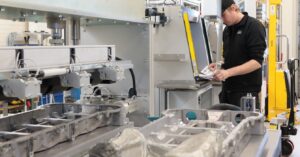
Once a design is finalised, manufacturers need test systems that keep up with production speeds while maintaining traceability.
Our CES platform supports:
- Fast cycle times that suit high-speed electronics assembly lines
- Flexible fixture design for multiple control unit variants
- Dry, non-contaminating test methods that protect sensitive electronics
- Automated loading, recipe control, and robotic integration
- Unit-level data logging that connects directly to MES/ERP for traceability and warranty protection
This enables control unit manufacturers to adopt reliable sealing strategies at scale.
How Better Sealing Strategies Reduce Total Cost of Ownership
A well-engineered sealing system does more than prevent field failures. It saves cost across the product lifecycle:
- Fewer warranty claims and customer returns
- Faster PPAP and smoother supplier qualification
- Lower rework during assembly
- Reduced calibration and drift-related downtime when the test system is stable
- Easier standardisation across global sites using one test platform
Manufacturers who build sealing into the design process reduce long-term operations cost and achieve more reliable performance in the field.
Wrapping Up
Next-generation control units demand a more deliberate and robust sealing strategy than ever before. By integrating deterministic leak testing into both design and production, manufacturers can create electronics that withstand real-world conditions while maintaining full traceability and compliance.
Our tailored, automation-ready CES systems give engineering teams the sensitivity, repeatability, and speed they need to support reliable sealing from prototype to global production.