
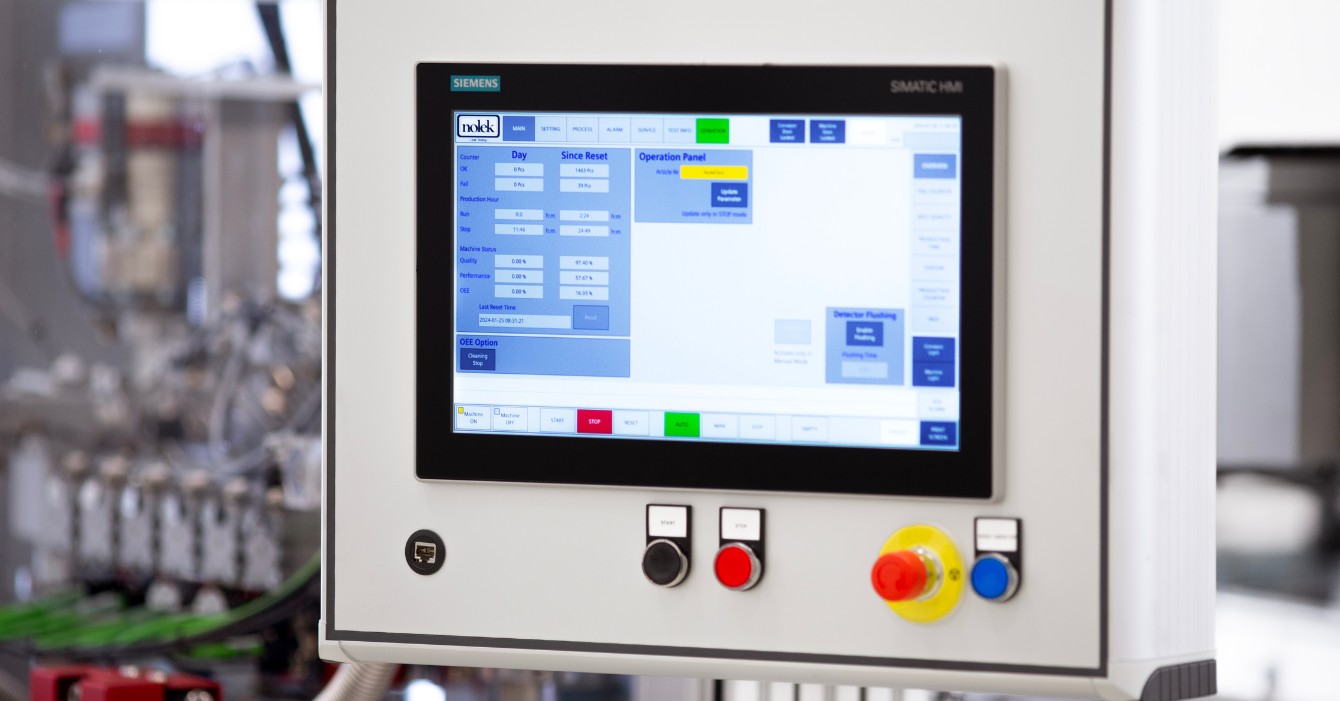
Most packaging failures do not appear suddenly. They develop slowly, often hidden within small variations in sealing, drift in test equipment, or subtle shifts in packaging materials. Manufacturers who understand these early signals can prevent deviations long before they rise to the level of a rejected batch or, worse, a field recall.
This article explains how modern leak test data, when captured and interpreted correctly, becomes a powerful early warning system for regulated pharma and biopharma environments.
Why Packaging Failures Rarely Come Out of Nowhere
Each recall investigation usually reveals a similar pattern.
Small outliers appear in test values. Operators notice occasional unstable readings. Calibration cycles show slight drift. None of these events seem critical in isolation, but together they signal a system moving out of control.
The root causes often include:
- Tooling wear that changes sealing performance
- Packaging material variability between batches
- Incorrectly set test limits that hide borderline defects
- Instrument drift that goes unnoticed between calibrations
- Inconsistent test chamber conditions on multi-format lines
The earlier these patterns surface, the easier they are to correct.
Three Categories of Leak Test Data That Predict Problems Early
Instead of focusing only on pass-fail results, high-performing plants look at three strategic data layers.
1. Trend Lines Across Production Runs
Gradual shifts in average test values show how the closure system behaves over time. Slow changes often signal sealing element wear or a creeping alignment issue.
2. Unit-Level Variability
Random outliers might not be defects, but recurring ones at similar points in the batch often point to systemic stress, fill volume changes, or stopper positioning variations.
3. Equipment Performance Indicators
Stable decay methods should produce consistent readings. When the baseline drifts, it suggests calibration issues, leaks in the test fixture, or environmental variation.
A secure, CFR Part 11-ready data logging system captures all three layers and ties them to specific lots, operators, recipes, and time stamps. This builds a complete digital audit trail suitable for investigations and regulator review.
How Predictive Leak Test Monitoring Reduces Real-World Risk
Early visibility across test data leads to practical advantages that directly protect product integrity.
Fewer Batch Rejections
Identifying subtle packaging inconsistencies early allows teams to correct problems before thousands of units are affected.
Shorter Investigations
Clear data trails remove guesswork. QA teams can quickly point to the moment a process shifted and identify contributing factors.
Improved Calibration Control
Understanding when test results begin drifting helps schedule calibration based on evidence rather than fixed intervals. This saves time and reduces unplanned downtime.
Better Process Stability Across Formats
Multi-format lines benefit from recipe-level insights. Each packaging type develops its own unique performance fingerprint, which operators can monitor and adjust.
The Role of Deterministic Methods in Reliable Prediction
Deterministic leak testing is essential for predictive analysis because it produces stable, quantitative data. Pressure decay and vacuum decay methods allow precise detection of micro and sub-microlitre leaks without contamination or destructive handling.
Nolek’s in-house developed pressure decay instruments provide consistent measurement and long-term stability, which improves trend reliability and prevents misleading variation during long production cycles .
Nolek Helps Strengthen Failure Prediction
- Manufacturers who adopt our Custom Engineered Solutions benefit from:
- High-sensitivity dry testing suited to sterile and cleanroom operations
- Automated, secure data logging with full traceability for GMP and regulatory use cases
- Repeatable performance that supports accurate trend analysis
- Test systems designed specifically for each packaging geometry, reducing noise and false variation
This combination creates an environment where leak test data becomes a proactive tool, not just a pass-fail gate.
Wrapping Up
Recalls rarely begin with a single dramatic failure. They emerge gradually through small, measurable shifts in packaging performance. By treating leak test data as a predictive asset, manufacturers can identify these early signals, correct issues swiftly, and safeguard both patient safety and product quality.
With stable deterministic methods, cleanroom-ready engineering, and digital traceability, we can equip pharma producers to stay ahead of problems rather than react to them.