For manufacturers of sterile medical devices, leak testing plays a critical role in maintaining patient safety, meeting regulatory requirements, and delivering consistent product quality. But despite its importance, leak testing is often misunderstood, misapplied, or underestimated, especially when it comes to non-destructive approaches.
In this article, we explore some of the most common misconceptions, outline proven testing methods, and highlight what every validation and quality team should consider when designing or upgrading a leak testing process.
Myth 1: “Destructive Tests Are More Reliable”
Many manufacturers rely on traditional dye ingress or bubble testing during development, assuming these methods provide a safe margin of error. But these tests are:
- Subjective and operator-dependent
- Inherently destructive and wasteful
- Less sensitive to micro-leaks or fine defects
- Not suitable for high-throughput environments
Non-destructive testing methods, by contrast, offer deterministic, repeatable results—making them far more aligned with modern regulatory expectations.
Myth 2: “Non-Destructive = Less Sensitive”
This is a common misconception. While some older non-destructive methods lacked precision, today’s technologies—such as vacuum decay and helium leak detection—are highly sensitive, often capable of identifying micro-leaks below 1 micron.
These methods are:
- Validatable to USP <1207> and EU GMP Annex 1
- Scalable for both lab and production environments
- Proven across device types including syringes, catheters, pouches, and blisters
Sensitivity is no longer a trade-off. With the right equipment, it can be a competitive advantage.
Method 1: Vacuum Decay
Vacuum decay testing draws a vacuum around the sealed medical device and monitors pressure changes that may indicate the presence of a leak. It is widely adopted for:
- Blister packages
- Pouches and bags
- Parenteral containers
- Drug delivery devices
Benefits:
- Non-destructive
- Fully automatable
- Supported by global regulatory standards
- No gas handling or fill required
Method 2: Helium Leak Detection
Using helium as a tracer gas, this method identifies even the smallest leaks with a high degree of accuracy. It is especially useful for:
- Combination products
- Devices with complex geometries
- High-risk clinical applications
Benefits:
- Extremely high sensitivity
- Deterministic and repeatable
- Ideal for R&D or critical control points
- Supports ASTM F2391 and USP <1207> compliance
Must-Have: Regulatory Alignment
Validation engineers and QA teams need to ensure that the chosen leak test method aligns with:
- ISO 11607: Packaging for terminally sterilised devices
- ISO 13485: Quality management systems for medical devices
- USP <1207>: Package integrity testing for sterile products
- EU MDR / FDA QSR: Product safety and performance requirements
A non-destructive method that can be validated under these standards helps reduce rework, prevent recalls, and improve audit readiness.
Must-Have: Adaptability to Packaging Types
With device formats ranging from rigid vials to flexible pouches and sealed catheters, your leak testing solution must be adaptable. Look for systems that:
- Can accommodate various product sizes and geometries
- Offer configurable fixtures or tooling
- Integrate with upstream and downstream automation
- Deliver traceable data with CFR Part 11 compliance
The right solution should support your line today—and scale with your product tomorrow.
Nolek’s Role in Non-Destructive Leak Testing
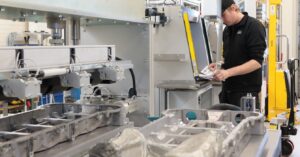
At Nolek, we work closely with MedTech manufacturers to manufacture non-destructive leak testing systems that meet regulatory standards and production demands. Whether you need high-speed vacuum decay testing or precise helium leak detection, our solutions are designed to:
- Reduce product loss
- Improve test repeatability
- Shorten validation timelines
- Support global compliance from day one
We also provide validation support and integration options that fit seamlessly into your existing quality framework.
Final Thoughts
Leak testing for medical devices does not have to be destructive, inefficient, or uncertain. With today’s validated, non-destructive methods, QA and validation teams can gain clearer insights, reduce product waste, and stay aligned with industry regulations.
To learn more about how Nolek can support your non-destructive testing goals:
→ Book a consultation with our MedTech specialists