Electronics manufacturers increasingly operate in environments where product families shift frequently, order volumes fluctuate, and new variants appear with little notice. High-mix, short-run production keeps factories agile, but it places intense pressure on quality control teams, especially when leak testing becomes a bottleneck.
This article explains why testing is often the limiting factor in high-mix operations and how manufacturers can modernise their approach to maintain throughput without compromising sealing performance.
Why High-Mix Production Strains Traditional Leak Testing
In fast-changing electronics lines, every hour lost to tooling changes, operator adjustments, or long setup times has a direct impact on delivery schedules. Common causes of leak-test bottlenecks include:
- Manual fixtures that take too long to reconfigure
- Test parameters that must be rewritten for each product family
- Inconsistent cycle times between variants
- Limited data traceability when switching SKUs
- Multiple, incompatible test stations across the plant
When the test bench cannot keep up, WIP builds up and operators are forced to batch products, slowing the entire line.
What High-Mix Manufacturers Need From a Leak Testing System
To stay agile, factories require testing equipment that adapts quickly and reliably.
1. Fast Changeover
Tooling must support rapid swap-outs with repeatable alignment. Clamps, seals, and adapter plates should be designed for easy replacement without tools or lengthy calibration checks.
2. Recipe-Driven Testing
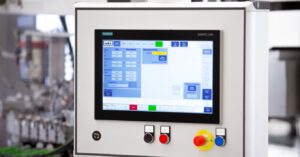
Operators should load parameters for each product at the touch of a button. This reduces human error and ensures that each unit is tested under the correct conditions.
3. Stable Measurement Across Multiple Formats
A system that delivers predictable readings across varied geometries makes it far easier to maintain quality assurance.
Nolek’s flexible fixtures and automated test sequences are designed specifically for these high-mix requirements, allowing rapid batch-to-batch transitions without sacrificing accuracy.
Balancing Sensitivity and Cycle Time
High-mix production often introduces diverse enclosure sizes and materials, which impact test duration. A large telecom housing may need longer stabilisation times than a compact sensor module.
Efficient lines use a sensitivity-to-speed balance:
- High sensitivity for products with strict IP requirements
- Shorter tests for non-critical or sealed component groups
- Automated mode switching based on product recipe
Because our test instruments are developed in-house, they maintain stable performance across a wide range of pressure settings, making it easier to match cycle times to real-world operational needs .
Traceability Without Slowdown
Short-run production creates traceability challenges. Each variant needs its own test record, yet maintaining this manually slows operators and risks data loss.
Modern production teams solve this by linking leak tests directly to:
- Serial numbers
- MES/ERP entries
- Automated barcode/RFID scanning
- Unit-level test histories
Nolek’s data logging architecture offers these capabilities, helping manufacturers meet audit requirements without adding manual workload .
Removing the Human Bottleneck
Manual testing introduces variability in high-mix lines. We can provide fully automated test systems to automate handling, including guided operator workflows to speed up processes while reducing error rates.
Examples include:
- Robotic loading for delicate or complex housings
- Guided setup screens that confirm fixture selection
- Error-proofing sensors to detect misaligned parts
- Automated calibration and self-check routines
These approaches keep short-run lines moving while preserving consistent test quality.
Why Nolek Fits High-Mix Electronics Production
Our CES platform directly supports the realities of short-run, multi-variant manufacturing:
- Rapid reconfiguration of fixtures and tooling
- Programme-controlled test recipes for quick changeovers
- Fast cycle times for high-throughput demands
- Stable, repeatable measurement performance due to in-house instrument design
- Full unit-level traceability for MES and QA systems
- Support for global standardisation of test processes across sites
With these capabilities, manufacturers can scale complexity without sacrificing uptime.
Wrapping Up
Short-run, high-mix electronics production will only become more common as product life cycles shorten and customer requirements diversify. Leak testing must keep pace, not act as a constraint. By adopting flexible fixtures, recipe-based testing, stable instrumentation, and built-in traceability, manufacturers eliminate bottlenecks and maintain consistent quality.
Our approach can support high-mix teams to stay fast, accurate, and audit-ready, even as product variants keep changing.